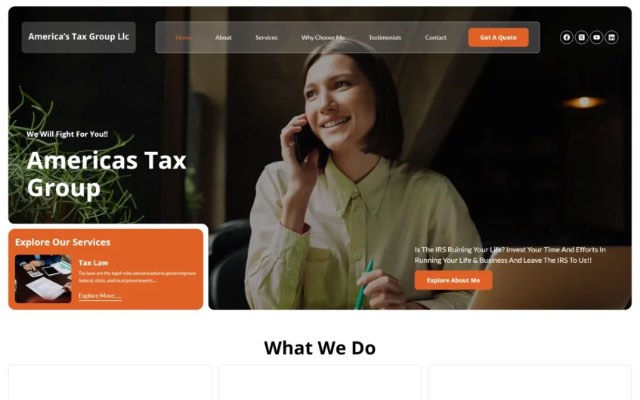
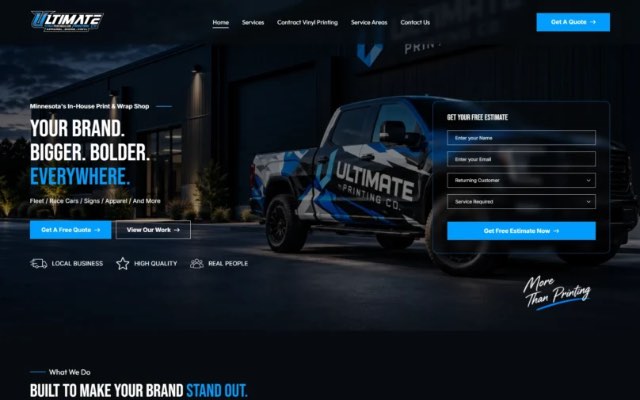
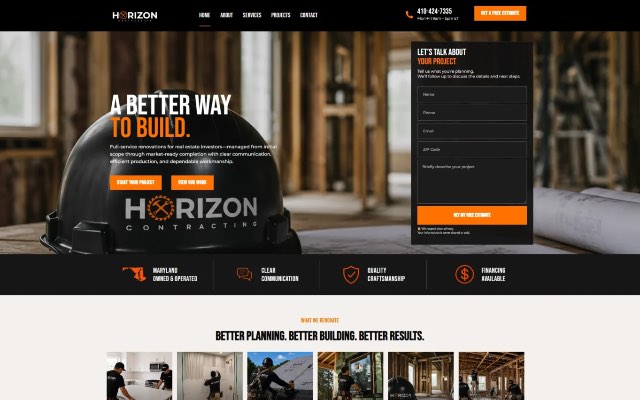
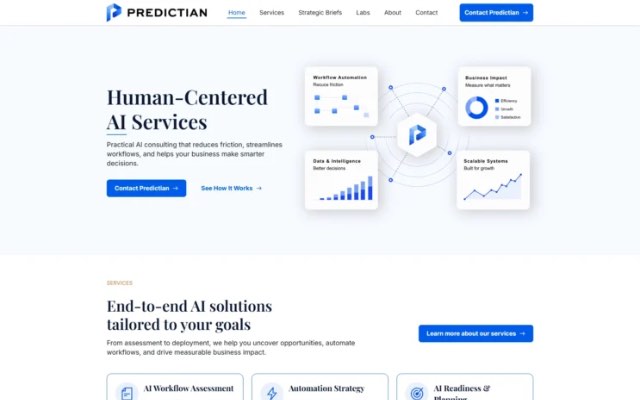
Most businesses need a website first and add landing pages when they start paying for traffic. A website tells people who you are and helps them find you on Google. A landing page has one job: getting visitors from a specific ad, email or offer to take one action. If you have no online presence and customers will look you up, start with a small website. If you already have a site and you’re about to run ads, build a landing page for the campaign.
There is one real exception. If you need to test a single offer this week, or you sell only one thing, a landing page alone can be a sensible starting point, as long as you understand what it won’t do for you. The rest of this guide helps you work out which situation you’re in.
| Question | Landing page | Website |
| Main purpose | One action, such as a call, quote request or sign-up | Explain the business and serve many visitor needs |
| Number of pages | One | Usually five or more |
| Navigation | Little or none, to limit distractions | Full menu so people can explore |
| Where traffic comes from | Mostly ads, email and social campaigns | Search, referrals, direct visits and your Google Business Profile |
| Organic SEO potential | Limited, usually one narrow topic | Strong over time, with room to cover many searches |
| Credibility | Must fit all of its proof on one page | About, reviews, past work and policies each have a place |
| Lifespan | Often tied to a campaign or offer | Long term, updated as the business changes |
A landing page is not the same thing as a homepage, even though both can be the first page someone sees. A homepage has to welcome everyone: new customers, past customers, job seekers and suppliers. A landing page is written for one kind of person who arrived with one thing in mind.
Build a small website. A plumber, cleaner or accountant gets found through searches like “emergency plumber near me,” and customers check you out before calling. You want a homepage, a page for each main service, an About page with real photos, and a contact page. Add a link to it from your Google Business Profile, which is often where local customers meet you first. Our local SEO checklist for contractors shows how those pieces work together.
Keep the website and add a landing page. Sending every click to your homepage makes people hunt for what they searched for. Google describes landing page experience as how relevant and useful your page is to people who click your ad, and it’s one of the three Quality Score components alongside expected clickthrough rate and ad relevance. A page dedicated to the service in your ad gives you the best chance of meeting that standard. Our guide to Google Ads landing page best practices covers how to build one section by section.
A landing page may be all you need for now. A workshop with a registration date, or a single product with a clear buyer, doesn’t need a blog or a five-page menu. Once you have a second offer, or people start searching for your brand and asking questions you can’t fit on one page, it’s time to grow into a site.
Start with a landing page. Describe the offer, run a small ad budget to it and see whether people act. This is one of the most useful things a landing page does, because you learn whether anyone wants the offer before paying for a full build. Just remember that a weak result can mean a weak page or weak targeting, not only a weak idea, so don’t judge it on a handful of visits.
You need a store, and landing pages are an add-on. A catalog, cart and checkout can’t live on one simple page if you sell a range of products. Stores often add landing pages for seasonal promotions or a hero product, and send campaign traffic there instead of to a general category page.
You’ll see claims that landing pages convert several times better than websites. Be careful with them. Published figures vary widely, many come from companies that sell landing page tools, and a comparison is often unfair because ad visitors already have intent while general site visitors may just be browsing.
A more useful reference point is Unbounce’s benchmark report, based on more than 41,000 landing pages, which put the median landing page conversion rate at 6.6% across industries in its Q4 2024 edition. Even that is a rough yardstick. Rates differ by industry, offer and traffic source, and a “conversion” for one business may be a free download while for another it’s a request for a quote. Your own numbers from your own tracking will always tell you more than an industry median.
Prices vary a lot by who does the work and how much strategy and writing is included. Treat these as rough, because most published 2026 figures come from agencies and tool vendors using different methods.
| Option | Typical published range | Usually best for |
| DIY landing page on a builder | $0 to about $500, plus any subscription | Quick tests with a very small budget |
| Freelancer-built landing page | About $300 to $3,000 | A single campaign with a clear offer |
| Agency-built landing page | About $2,000 to $8,000 or more | Larger ad budgets where strategy and copy are included |
For comparison, Blue IT’s own website packages are Starter, up to 5 pages in 5 to 7 business days, and Growth, up to 10 pages plus a blog in 10 to 12 business days. Whichever quote you get, ask who writes the copy, who sets up call and form tracking, and what happens if you want changes later. Then add running costs: builder subscriptions, hosting, maintenance and the ad budget itself.
If you end up with a website and several landing pages, a few habits keep things tidy:
Answer these three questions:
If you answered yes to the first two, build both, starting with the website if your budget only allows one at a time. Before launching either, run through our small business website checklist to catch the basics that often get missed.
For a single offer, a short campaign or a quick test, yes. For most ongoing businesses, no, because one page has limited room to rank for different searches or to answer the questions customers ask before they buy.
It can, particularly for a narrow topic, if it’s indexable and genuinely useful. But a page designed for one action with little supporting content usually has less to offer searchers than a detailed service page, so don’t rely on it as your SEO plan.
Generally not. A page focused on the service in your ad can repeat the promise the visitor just clicked on, without making them search for it. If you have a strong service page already, it can work well as a destination while you build something dedicated.
Not quite. A one-page website usually covers several topics in sections, such as services, about and contact, for a general visitor. A landing page focuses on one offer and one action for a specific audience.
Start with one per main offer you’re actively advertising. Add more when you have a real reason, such as a different service or audience that deserves its own message, not just to increase the page count.
Tell us what you sell and where your customers come from, and we’ll give you a straight answer on whether you need a website, a landing page or both. You can read more about our website design and landing page design services, or contact us to talk it through.

Talk to our team about your project. Book a free consultation, no obligation.